Livpure Official Website › Choosing A Supplement
Choosing A Liver Support Supplement
Seven checks do most of the work: named ingredients, printed amounts, a serving size, a capsule shell, an allergen statement, a real guarantee and a named seller you can phone. A label that passes all seven is rare. A label that passes none is not worth your money.
The checklist is applied to the product sold on this website at the foot of the page. It passes three rows and fails four.
Why a checklist beats a brand comparison
A comparison table between three brands tells you which three somebody chose to compare, and no more. A checklist tells you what to look for on the next bottle you pick up, including the ones nobody has written about.
The seven below are answerable from a label and a seller’s own pages in about five minutes. None needs a laboratory or a degree, and none is a matter of opinion — either the number is printed or it is not.
They are ordered by what they cost a seller to answer. The first is free; the second separates a label written for a buyer from a label written for a marketing page.
The seven checks, and what each one is really asking
1. Is every ingredient named?
Not “a proprietary herbal blend” but the actual names, ideally with the plant part and the Latin binomial. A label that will not name what is inside has answered the only question that mattered.
2. Is an amount printed beside each name?
Milligrams or micrograms, per serving, per ingredient. This decides whether any research anywhere applies to the bottle in your hand, and it is the check most often missing.
3. Is a serving size published, with a count?
How many capsules make a serving, and how many servings are in the container. Without it you cannot work out what a day costs.
4. Is the capsule shell disclosed?
Hypromellose or gelatin. Every vegetarian and vegan claim on a capsule product rests on this one line, and it is a single word to print.
5. Is there an allergen statement?
What it contains and what shares the line. A gluten-free seal is a claim about a formula; an allergen statement is a claim about a factory, and those are different promises.
6. Is the guarantee real, dated and claimable?
A window in days, a published returns address, a phone number that answers, and a statement of what is deducted. A seal reading “satisfaction guaranteed” with no route behind it is decoration.
7. Is the seller named and reachable?
A company, a postal address and a phone number with a person at the end of it. If the only contact is a form on a landing page, ask who you would be chasing in eight weeks.
What a proprietary complex can and cannot hide
A proprietary blend is a group of ingredients presented as one item. Where a supplement facts panel carries one, it prints them in descending order of weight and gives a single total for the group.
That total sets a ceiling — nothing inside the blend can exceed it, so a 300 mg complex containing eight things is not carrying 300 mg of the one you came for. Order plus total bounds every ingredient in the group.
What a blend hides is the ratio. The first name can be almost all of the total and the last a pinch, or the reverse. That is the commercial purpose of the format: it lets a formula be advertised on its most impressive ingredient without saying how much is there.
What a blend cannot hide is the names, the serving size, the capsule count and the guarantee. Three of the seven checks are untouched by it, which makes a blend a reason to read harder rather than to stop.
How to read a label that publishes no amounts at all
A blend with a total is one thing. Ingredients grouped into named complexes with no total for either is another — and it removes even the ceiling. At that point the arithmetic above has nothing to work on.
Four things are still countable. How many capsules are in the bottle. How many days the seller sells that bottle as. How many ingredients share a serving. And what a day costs.
Those four give you a real sentence. A bottle of 60 capsules sold as a 30-day supply and naming ten ingredients puts all ten into two capsules a day. A capsule has a physical size, and ten ingredients sharing two of them cannot each be at a gram. That is not a figure for any one ingredient, but it tells you which research doses are out of reach before you pay.
Then the useful question: what does the seller gain by not printing the number? Where a formula is generous, the number is the advertisement. A mineral with a published daily value of 45 micrograms and an upper limit of 2,000 is easy to print well, and a label that omits even that has told you something.
Livpure scored against all seven checks
| The check | What a label that passes prints | Livpure | Result |
|---|---|---|---|
| 1. Ingredients named | Each ingredient by name | Six named: silymarin, betaine, berberine, molybdenum, glutathione and camellia sinensis. The supplier’s listing artwork names the same six, which is two sources agreeing. | Pass |
| 2. Amounts printed | mg or mcg per serving, per ingredient | No amount for any of the six, and no total for either of the seller’s two named complexes. | Fail |
| 3. Serving size published | Capsules per serving and servings per container | The published direction is to take it daily with a large glass of water. Sixty capsules sold as thirty days is two a day by arithmetic, and the bottle you receive carries the directions. | Fail |
| 4. Capsule shell disclosed | Hypromellose, or gelatin | Not disclosed, which is the line the vegetarian seal rests on. | Fail |
| 5. Allergen statement | What it contains, and what shares the line | None published. The gluten-free and dairy-free seals are plausible from the six names and cannot be checked without one. | Fail |
| 6. Guarantee real and dated | A window in days, an address, a route | 60 days from purchase, accepting “even empty bottles” for a refund “less shipping and handling”, with a published returns address and order line. | Pass |
| 7. Seller named and reachable | A company, an address, a phone that answers | Getlivpure, the U.S. stocking partner for Livpure, with a New York office, a separate returns address and order support on +1 (302) 200-3480. | Pass |
Three passes, four fails. Lot LIV-26/GE-7267 and certificate LIV-7267-26-GE are label references rather than a laboratory report this desk has read.
The four failures are one fact wearing four hats: nothing about the inside of the capsule is published. Fix the second row and the third and fifth become easy, because a seller willing to print milligrams has the paperwork.
The three passes are the ones that protect money rather than expectations. You know what is in it by name, you can send it back for sixty days, and there is a phone number with somebody behind it — which is the honest reason the sixty-day window carries as much weight here as it does.
Three of seven is not a verdict on whether the capsules suit anybody. It is a verdict on what the label lets a buyer check before paying.
What a good label in this category would print that this one does not
- The amount of each ingredient, per serving. The one line that turns every figure in the category guide into something you can use.
- The standardisation behind the word silymarin. A stated percentage of silymarin, and increasingly of silybin, because the word alone describes a mixture rather than an amount.
- The EGCG content, in milligrams. Every published safety figure for green tea extract is expressed in EGCG rather than extract weight, so an extract weight alone checks against none of them. NCCIH also names the atorvastatin and raloxifene interactions, which belong on a label carrying the ingredient.
- The US Pharmacopeia’s cautionary wording for green tea extract. USP adds “Do not take on an empty stomach. Take with food” to its monograph, because fasting sharply raises catechin absorption. The direction published here is a large glass of water daily and says nothing about food.
- The form and amount of the mineral. Molybdenum is the one ingredient with a published floor and ceiling, and it costs nothing to print.
- The capsule shell and an allergen statement. Two short lines that between them decide whether four of the eleven seals mean anything.
- A certificate of analysis a buyer can pull by lot. A lot number is useful only if something can be looked up with it.
What the checklist cannot tell you
A label that passes all seven is a well-documented product, not a proven one. LiverTox on herbal and dietary supplements records that they are a recognised cause of drug-induced liver injury, and full disclosure on a panel does not change that.
Nor does a seal. The FDA’s own explanation is blunt: mere registration of an establishment does not denote approval of it, and, in its own heading, the agency does not approve dietary supplements at all. Registration buys inspection against good manufacturing practice, which is worth something and is not approval.
The claim on the front is the same story. A structure/function claim is notified to the FDA within 30 days rather than approved beforehand, because only a drug may legally claim to treat anything. The FTC asks separately for competent and reliable scientific evidence behind any claim about a supplement’s benefits or safety.
And no label reports what is happening inside anyone. A liver panel measures ALT, AST, ALP, GGT, bilirubin and albumin, and it is a blood test ordered for a reason. A checklist covers only what you can know before you pay.
Running the checklist on any bottle in five minutes
Photograph the panel
The back of the bottle, in focus. A product page is marketing — the panel is the label.
Count what is countable
Capsules per bottle, days the seller sells it as, ingredients per serving, and the price divided by the days.
Look for a number beside a name
One number beside one ingredient separates a label you can check from a label you have to trust.
Find the two short lines
The capsule shell and the allergen statement. If a vegetarian or gluten-free seal appears without them, the seal rests on nothing.
Find the way back out
The refund window in days, the returns address, who pays return postage and what is deducted. Then dial the number.
Sources cited in this guide
- NIH Office of Dietary Supplements. Molybdenum: Fact Sheet for Health Professionals. https://ods.od.nih.gov/factsheets/Molybdenum-HealthProfessional/
- National Center for Complementary and Integrative Health. Green Tea: Usefulness and Safety. https://www.nccih.nih.gov/health/green-tea
- Oketch-Rabah HA, Roe AL, Rider CV, et al. United States Pharmacopeia (USP) comprehensive review of the hepatotoxicity of green tea extracts. Toxicol Rep. 2020;7:386-402. https://pubmed.ncbi.nlm.nih.gov/32140423/
- MedlinePlus, U.S. National Library of Medicine. Liver Function Tests. https://medlineplus.gov/lab-tests/liver-function-tests/
- National Institute of Diabetes and Digestive and Kidney Diseases. Herbal and Dietary Supplements. In: LiverTox: Clinical and Research Information on Drug-Induced Liver Injury. Bethesda (MD): NIDDK; 2012-. https://www.ncbi.nlm.nih.gov/books/NBK548441/
- U.S. Food and Drug Administration. Structure/Function Claims. https://www.fda.gov/food/nutrition-food-labeling-and-critical-foods/structurefunction-claims
- U.S. Food and Drug Administration. Is It Really 'FDA Approved'? https://www.fda.gov/consumers/consumer-updates/it-really-fda-approved
- Federal Trade Commission. Health Products Compliance Guidance. https://www.ftc.gov/business-guidance/resources/health-products-compliance-guidance
Who writes this guide
These guides are written by the same desk that sells the product, which is a reason to check them rather than to trust them. Four rules make that possible:
- Every dose is the dose the study used, read from that study’s own record and printed with what the study found, including when it found nothing.
- Nothing is estimated. Where a label publishes no amount, these guides say so once and print the research figure beside it rather than inventing a comparison.
- Sources are linked in the sentence, not only at the foot, so a statement and its evidence can be checked in one movement.
- A citation that would read as a treatment claim is left out, even where it is real and positive, because a dietary supplement may not claim to treat anything.
We earn when you buy. The scorecard that fails four rows of seven is where that is visible, and it is the reason the other six are worth reading.
More about Livpure
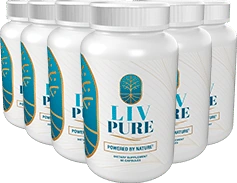
Hold the checklist up to Livpure
It passes three rows and fails four, and the sixty-day window is what covers the difference.
$49 to $79 a bottle · 60 days to change your mind
Order Livpure On The Official WebsiteOne-time payment, no subscription · 60-day money-back guarantee · lot LIV-26/GE-7267
 Sixty days from the day you buy it