Livpure Official Website › Ingredients
Livpure Ingredients: The Six Names in Each Capsule
Livpure is made with six named ingredients.
They are silymarin, betaine, berberine, molybdenum, glutathione and camellia sinensis, the tea plant. No milligram amount is printed for any of them.
To see what the bottle shows, read the supplement facts.
Two sources name the same six, the research on each is linked in the sentence that uses it, and the amounts have a section of their own.
What are the ingredients in Livpure?
Six names, each with the evidence behind it.
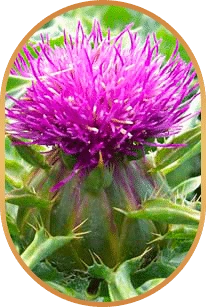
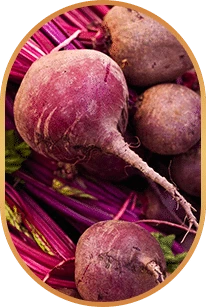
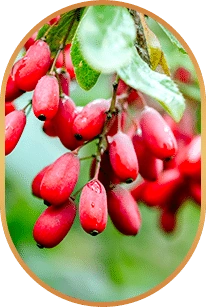
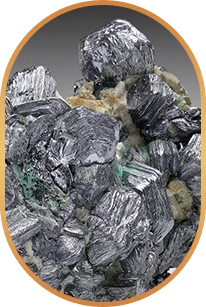
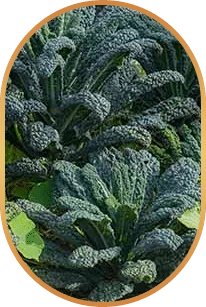

Six names, and two independent sources for them. The supplier’s paperwork lists silymarin, betaine, berberine, molybdenum, glutathione and camellia sinensis, and the supplier’s own “inside Liv Pure” artwork names exactly the same six — two sources agreeing on an ingredient list, which is rarer in this category than it should be.
Silymarin
the standardised extract of milk thistle seed, Silybum marianumAmount per capsule: not published
Milk thistle is a spiny purple-flowered plant, and silymarin is the mixture of flavonolignans that extraction concentrates out of its seed. It is first on the supplier’s list, first on the artwork, and the one name here with centuries of use behind it.
The evidence is thinner than the reputation, and the plainest summary is NCCIH’s own: there is not enough high-quality evidence to allow definite conclusions about milk thistle’s effects on health conditions in people. The largest modern trial gave 420 mg or 700 mg three times a day for 24 weeks, and neither amount beat placebo on liver enzymes. Its volunteers were under care for chronic hepatitis C, so the result describes silymarin rather than this capsule.
Betaine
betaine, also written trimethylglycine, the compound first isolated from sugar beetAmount per capsule: not published
The second name is the useful one: trimethylglycine is glycine carrying three methyl groups, and handing one of those over is the whole of what betaine does. Beet, spinach and wheat germ are where most people get it, and the body also makes it from choline.
Its cleanest human trial gave 1.5 g, 3 g or 6 g a day for six weeks and lowered fasting homocysteine by 12%, 15% and 20%. The same paper puts ordinary dietary intake at 0.5 to 2 g a day — the studied range starts roughly where a normal diet already ends.
Berberine
an alkaloid drawn from barberry, goldenseal and several other plantsAmount per capsule: not published
Berberine is a bright yellow alkaloid drawn from barberry, goldenseal, Oregon grape and several other plants. It has served as a dye and as a folk remedy, and it is the most heavily trialled ingredient on this panel.
The literature is large and specific: 46 randomised trials pooled in 2021 found reductions in HbA1c, fasting glucose and post-meal glucose in people with type 2 diabetes, at doses commonly around 500 mg two or three times a day. That is a blood sugar literature rather than a liver one. Berberine is also the name here that interacts with prescriptions, set out on who Livpure is for.
Molybdenum
an essential trace mineral with a published daily value of 45 micrograms for adultsAmount per capsule: not published
Molybdenum is an essential trace mineral and the only ingredient here with published numbers a reader can hold a label against. The NIH fact sheet sets the adult RDA at 45 micrograms a day and the tolerable upper intake level at 2,000 micrograms a day.
It works as a cofactor: the body uses it to run sulfite oxidase and two other enzymes, which is the closest thing to a mechanism story on this panel. It is also abundant in ordinary food — legumes especially — so deficiency is essentially unknown in healthy people.
Glutathione
a three-amino-acid peptide the body makes in the liverAmount per capsule: not published
Glutathione is a three-amino-acid peptide the body makes for itself, and the liver is the busiest place it is made, which is why it reads well on a liver label. The question about swallowing it is not how much is in the capsule but how much survives the trip.
A single 3 g oral dose in seven healthy volunteers did not raise plasma glutathione at all, because the gut and the liver break the peptide apart first. Against that, 250 mg or 1,000 mg a day for six months did raise body stores by roughly a third, and they fell back to baseline a month after the capsules stopped.
Camellia sinensis
the tea plant, the leaf that green tea and its extracts are made fromAmount per capsule: not published
Camellia sinensis is the tea plant. Green tea, black tea and oolong are all its leaf handled differently, and what goes into a capsule is a concentrated extract rather than the drink. The active fraction is the catechins, mainly EGCG.
NCCIH’s review is blunt that definite conclusions cannot yet be reached on most of what green tea is sold for, and it records that liver injury has been reported primarily with extracts in tablet or capsule form rather than with the drink. On a product sold for the liver, that record belongs in the open: it is set out in full on Livpure side effects.
How much of each ingredient is in Livpure?
No amount is published for any of the six. Not a milligram, not a microgram, and no total for either of the two complexes the seller’s page groups them into. So no dose on this page can be set against a Livpure figure, and none is estimated: what follows is what the research used, with the label’s silence beside it.
That matters most where the studied amounts are large. Two daily capsules holding six ingredients cannot carry a gram of any one of them and still carry the rest, which puts the silymarin and betaine trial doses out of reach. It matters least for glutathione, where absorption rather than amount is the question.
| Ingredient | The amount the cited research used | On this label |
|---|---|---|
| Silymarin | 1,260 mg or 2,100 mg a day for 24 weeks, with no advantage over placebo | not published |
| Betaine | 1.5 g to 6 g a day for six weeks, against 0.5 g to 2 g from food | not published |
| Berberine | commonly 500 mg two or three times a day, across 46 blood sugar trials | not published |
| Molybdenum | 45 micrograms a day as the RDA, 2,000 as the upper intake level | not published |
| Glutathione | 250 mg or 1,000 mg a day for six months, to raise body stores | not published |
| Camellia sinensis | measured as EGCG, and the published range sits with the safety record on the side effects page | not published |
A blend total, where one is given, is a ceiling rather than a dose. Neither complex here carries one. Two complexes and no milligrams is the longer version, and the label page works out what two capsules can carry.
Why the Liv Pure sales page names ten ingredients
The seller’s order page lists ten ingredients and sorts them into a “Liver Purification Complex” and a “Liver Fat-Burning Complex”. Six of those ten are the six above.
They are named here rather than quietly dropped, because a reader who has seen the seller’s page deserves to know why this website publishes a shorter list. The six are confirmed twice over; the four are the seller’s addition, and neither list carries an amount.
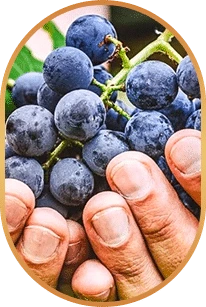
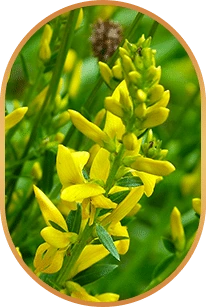
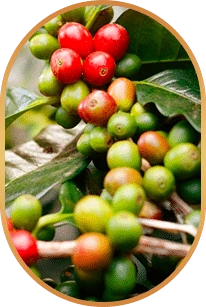
| Ingredient | What it is | The seller’s line for it |
|---|---|---|
| Resveratrol | a polyphenol found in grape skin and Japanese knotweed | Helps boost metabolism |
| Genistein | an isoflavone found in soy and a few other legumes | Anti-inflammatory and antioxidant properties |
| Chlorogenic acid | the main polyphenol in unroasted coffee beans | Helps improve calorie burning |
| Choline | an essential nutrient with a published adequate intake of 550 mg a day for adult men and 425 mg for adult women | Supports cognitive function |
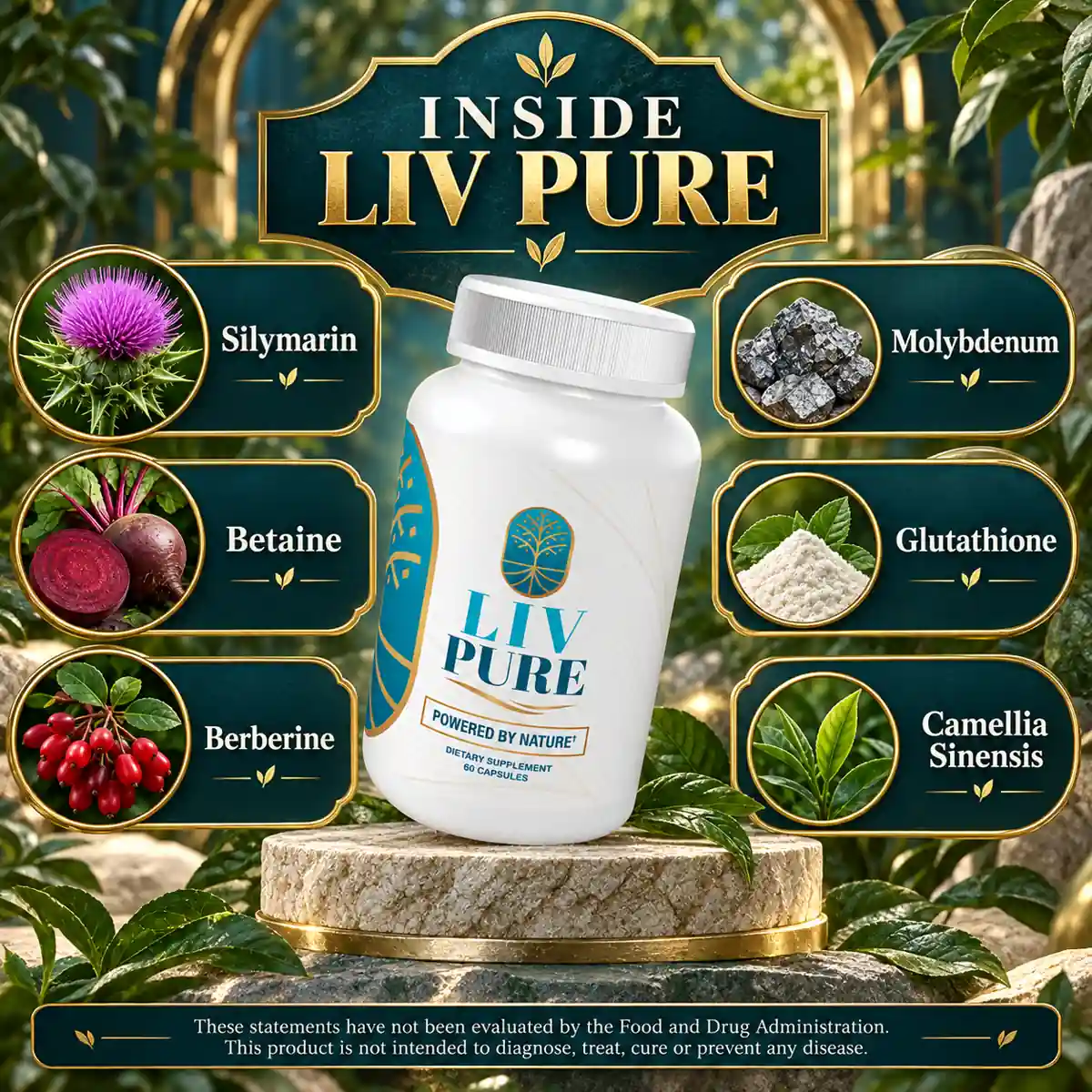
How the six Livpure ingredients fit together
Two concentrated plant extracts
Silymarin and berberine, both extracted rather than dried and powdered, and both studied at amounts a single-ingredient capsule is built to carry.
Two the body already handles
Betaine comes from beet and grain. Glutathione is made in the liver itself. For both, the question is what a swallowed dose adds to what is already there.
A mineral and a leaf
Molybdenum is a trace mineral with a published RDA and ceiling. Camellia sinensis is the tea plant, concentrated into an extract rather than brewed.
Read that way the panel is coherent — a defensible set of choices, made by somebody who knew the category.
Livpure ingredient questions, answered
Does Livpure contain caffeine?
Camellia sinensis is the tea plant, and tea leaf is a natural source of caffeine. How much carries into an extract depends on how it is made, and this label gives no caffeine figure. If caffeine keeps you awake, take the capsules earlier in the day.
Is milk thistle the same thing as silymarin?
Close, but not identical. Milk thistle is the plant; silymarin is the concentrated mixture taken out of its seed, and the part almost all of the research is about. A label naming silymarin is naming the extract, which is the more precise term.
The Liv Pure sales page lists ten ingredients. Which list is in the bottle?
The supplier names six, and the supplier’s own listing artwork names the same six, which is why they are the panel this desk publishes. The seller’s page adds four more and groups all ten into two complexes. Both lists describe the same bottle; one of them is confirmed twice.
Who writes the Livpure pages
This desk publishes what the label and the supplier state, and marks the places where a figure is missing. The four claims below are the ones a sceptical reader can audit in ten minutes, which is the only reason to make them:
- The bottle and the supplier are the source. The six ingredient names, the capsule count and the supply length come from the printed label, the supplier’s own listing artwork and the paperwork behind this desk. Prices come from the seller’s order page, read on 18 September 2026, not from a review column.
- The gaps are marked, never filled in. No amount is published for any of the six, so this website prints none and estimates none, including in the structured data a search engine reads.
- Sources are real and linked in the sentence. Every study cited here was confirmed against its own record before it was written down, and every government page was opened and checked by its title rather than assumed.
- Corrections change the date. Write to [email protected] and the review date at the foot of the page moves forward.
We earn when you buy. Getlivpure is the U.S. stocking partner for Livpure named at the top of this page, and this website makes money on orders placed through it. That is exactly why the missing amounts, the three-star review and the plain statement that Livpure is not a treatment for a liver condition are here: they are where our interest and yours pull apart, and you should be able to watch us choose.
Order support on +1 (302) 200-3480 handles tracking, changes, cancellations and refunds. It is not a sales line, and this website never presents it as a way to place an order: orders go through the checkout only.
Sources cited on this Livpure page
- National Center for Complementary and Integrative Health. Milk Thistle: Usefulness and Safety. https://www.nccih.nih.gov/health/milk-thistle
- Fried MW, Navarro VJ, Afdhal N, et al. Effect of silymarin (milk thistle) on liver disease in patients with chronic hepatitis C unsuccessfully treated with interferon therapy: a randomized controlled trial. JAMA. 2012;308(3):274-282. https://pubmed.ncbi.nlm.nih.gov/22797645/
- Olthof MR, van Vliet T, Boelsma E, Verhoef P. Low dose betaine supplementation leads to immediate and long term lowering of plasma homocysteine in healthy men and women. J Nutr. 2003;133(12):4135-4138. https://pubmed.ncbi.nlm.nih.gov/14652361/
- Guo J, Chen H, Zhang X, et al. The Effect of Berberine on Metabolic Profiles in Type 2 Diabetic Patients: A Systematic Review and Meta-Analysis of Randomized Controlled Trials. Oxid Med Cell Longev. 2021;2021:2074610. https://pubmed.ncbi.nlm.nih.gov/34956436/
- NIH Office of Dietary Supplements. Molybdenum: Fact Sheet for Health Professionals. https://ods.od.nih.gov/factsheets/Molybdenum-HealthProfessional/
- Witschi A, Reddy S, Stofer B, Lauterburg BH. The systemic availability of oral glutathione. Eur J Clin Pharmacol. 1992;43(6):667-669. https://pubmed.ncbi.nlm.nih.gov/1362956/
- Richie JP Jr, Nichenametla S, Neidig W, et al. Randomized controlled trial of oral glutathione supplementation on body stores of glutathione. Eur J Nutr. 2015;54(2):251-263. https://pubmed.ncbi.nlm.nih.gov/24791752/
- National Center for Complementary and Integrative Health. Green Tea: Usefulness and Safety. https://www.nccih.nih.gov/health/green-tea
Read the label, then order Livpure
Six named ingredients, 60 capsules a bottle, and 60 days to send it back if it does not earn its place.
$49 to $79 a bottle · 60 days to change your mind
Order Livpure On The Official WebsiteOne-time payment, no subscription · 60-day money-back guarantee · lot LIV-26/GE-7267
 Sixty days from the day you buy it