Livpure Official Website › Liver Support Guide
The Liver Support Supplement Guide
Most liver support supplements are built from the same short list: milk thistle or its extract silymarin, betaine, berberine, a trace mineral or two, and something antioxidant. The evidence behind each varies enormously, and the amount on the label decides whether any of it applies.
Six ingredient families, the dose each was studied at, and what those studies found. Several of the honest answers are that nothing happened.
What the liver does, and what detox means beside it
NIDDK lists the liver as one of the three solid organs of the digestive system and gives its digestive job in a line: it makes bile, which breaks down fats and travels the bile ducts to the small intestine.
Nothing in that description resembles a filter that clogs. NCCIH on detoxes and cleanses is the plainest source on the word: the studies are few and of low quality, and a 2015 review found no compelling research supporting detox regimes for eliminating toxins from the body. The FDA and the FTC have acted against detox sellers over hidden ingredients and false disease claims. So the question a label answers is what each ingredient is, and how much.
Milk thistle and silymarin: the longest record, and the most misread
Milk thistle is Silybum marianum, and silymarin is the mixture of flavonolignans extracted from its seed. NCCIH calls silymarin the plant’s main active constituent and states its finding plainly: there is not enough high-quality evidence for definite conclusions about milk thistle’s effects in people.
The best dose anchor in the category is the SyNCH trial: 420 mg or 700 mg of silymarin three times a day, 1,260 or 2,100 mg daily, for 24 weeks. Neither dose beat placebo on ALT — the liver enzyme a blood panel measures. The Cochrane review pooled 18 trials and 1,088 patients and found no significant effect on mortality, complications or liver histology.
Both were run in people with diagnosed liver disease, which is not who buys a supplement. What they establish is the scale: the trials that found nothing were using more than a gram a day. LiverTox puts the retail range at 250 to 750 mg two or three times daily, and scores milk thistle E, its lowest.
Betaine: one clean dose-response, and one large null result
Betaine, also written trimethylglycine, was first isolated from sugar beet. LiverTox describes it as a modified amino acid obtained from food or made in the body from choline, and records that it has been an FDA-approved orphan drug for inherited homocystinuria since 1996. That approval is for a rare inherited disorder and endorses nothing else.
The cleanest dose-response in healthy people is Olthof 2003: 1.5 g, 3 g and 6 g a day for six weeks lowered fasting homocysteine by 12, 15 and 20 per cent. Homocysteine is a marker rather than an outcome, and the same paper notes that ordinary dietary betaine intake already runs 0.5 to 2 g a day.
At the other end, Abdelmalek 2009 gave 20 g a day for twelve months to 55 patients and improved nothing it measured. Twenty grams is roughly forty capsules of powder. LiverTox notes 6 to 20 g daily without hepatotoxicity, which is a safety statement rather than a benefit one.
Berberine: a real research record, and a real interaction list
Berberine is an alkaloid drawn from barberry, goldenseal and other plants. It has the largest modern trial literature on a typical liver panel, and almost none of it is about the liver: a 2021 meta-analysis of 46 randomised trials found reductions in HbA1c, fasting glucose and post-meal glucose in people with type 2 diabetes. That is a glucose literature — in people with a diagnosis.
The interaction is the part worth carrying away. Guo 2012 gave healthy men 900 mg a day for two weeks: CYP2D6, CYP2C9 and CYP3A4 activity all fell, midazolam exposure rose 40 per cent, and the dextromethorphan ratio rose ninefold. Those three enzymes clear a long list of prescriptions between them, and the authors conclude that drug interactions should be considered.
NCCIH adds three things a label will not. Effects in the reviewed studies appeared mainly above a gram a day for more than eight weeks, and many of those studies carried a high risk of bias. Cyclosporine is named as an interaction. And berberine has been linked to a harmful buildup of bilirubin in infants, is likely unsafe for them, and may be unsafe in pregnancy or while breastfeeding. LiverTox puts the usual herbal-product dose at 250 to 500 mg two or three times daily and scores it E.
Molybdenum: the only ingredient here with published numbers on both sides
Molybdenum is an essential trace mineral and a cofactor for sulfite oxidase and two other enzymes, the closest thing to a mechanism story on a liver panel. The NIH Office of Dietary Supplements publishes both numbers: a recommended dietary allowance of 45 micrograms a day for adults, and a tolerable upper intake level of 2,000 micrograms.
So this is the only ingredient here with a published ceiling, and the only one where a label amount could be checked against anything. Deficiency is also essentially unknown in healthy people eating ordinary food — legumes are rich in it — so a supplemental amount fills no common gap. ODS states that molybdenum has no known, clinically relevant interactions with medications.
Glutathione, and the question that comes before the dose
Glutathione is a three-amino-acid peptide the body makes, largely in the liver. On a label it reads as the most direct thing a liver product could carry, which is why absorption comes first.
Witschi 1992 gave seven healthy volunteers a single oral dose of about 3 g, and plasma glutathione, cysteine and glutamate did not rise at all: swallowed glutathione is broken down by gamma-glutamyltransferase in the gut and the liver, and the paper concludes its systemic availability in man is negligible. Allen 2011 then gave 40 healthy adults 1,000 mg a day for four weeks and found no change in oxidative-stress markers or in glutathione status.
The counterweight is Richie 2015, which ran longer: 250 mg or 1,000 mg a day for six months in 54 adults raised body stores by roughly 30 to 35 per cent at the higher dose. Two caveats travel with it. Stores rose — nothing was shown to get better because they rose. And levels returned to baseline after a one-month washout, so it stops when the capsules stop.
Green tea extract: the leaf and the capsule are not the same thing
Drinking green tea is not the issue. LiverTox is explicit that tea drinking has not been associated with liver injury. The concern is the concentrated extract in capsule form, and specifically its catechins, mainly EGCG. LiverTox scores green tea A, its highest, meaning a well-established cause of clinically apparent liver injury: more than 100 published cases, onset usually one to six months in, most resolving one to two months after stopping, and fatal acute liver failure described.
It is also rare, and that belongs in the same paragraph. LiverTox says the rate of symptomatic injury is undoubtedly low against the wide scale on which these products are used, and susceptibility looks individual rather than dose-driven. NCCIH puts the immune-gene variant that makes people markedly more prone at 5 to 15 per cent of Americans, and names two interactions besides — the extract lowers atorvastatin blood levels and interacts with raloxifene.
Three numbers are worth holding. The Minnesota Green Tea Trial gave 1,075 postmenopausal women 843 mg of EGCG a day for a year: ALT rose above normal in 6.7 per cent against 0.7 on placebo. EFSA put the transaminase signal at 800 mg a day and above, against roughly 90 to 300 mg from an infusion. And the US Pharmacopeia found published injury cases from about 140 mg a day upwards, which is why a small amount is not by itself a safety argument.
The most actionable line in this guide is the US Pharmacopeia’s own cautionary labelling for green tea extract: “Do not take on an empty stomach. Take with food.” Fasting sharply increases how much catechin is absorbed. USP also says not to use the extract if you have a liver problem. The longer version of this record, both halves of it, is in green tea extract and your liver.
The dose each ingredient was actually studied at
| Ingredient | The dose the research used | What that study found |
|---|---|---|
| Silymarin | 1,260 or 2,100 mg a day, 24 weeks | Neither dose beat placebo on ALT |
| Betaine | 1.5 to 6 g a day, 6 weeks; and 20 g a day, 12 months | Homocysteine down 12 to 20 per cent; the 20 g trial changed nothing |
| Berberine | 900 mg a day, 2 weeks, healthy men | Three CYP enzymes inhibited, midazolam exposure up 40 per cent |
| Molybdenum | RDA 45 mcg a day; upper limit 2,000 mcg | The only published floor and ceiling on the panel |
| Glutathione | 3 g once; 1,000 mg a day, 4 weeks; 250 to 1,000 mg a day, 6 months | Nothing, nothing, then stores up 30 to 35 per cent |
| Green tea extract | 843 mg EGCG a day for a year | ALT above normal in 6.7 per cent against 0.7 on placebo |
Every figure above is the amount the cited study used. None can be set against any particular bottle unless that bottle prints one.
What a supplement in this category is allowed to say
A phrase such as “supports liver detoxification” is a structure/function claim. The FDA’s page on those claims sets out what that means: the manufacturer notifies the agency within 30 days of first using the claim rather than applying for permission, nobody reviews it beforehand, and the label must carry the statement that the FDA has not evaluated it.
The reason is in the same sentence as the rest of it. A supplement is not intended to diagnose, treat, cure or prevent any disease, in the FDA’s words, because only a drug can legally make such a claim. A page describing what a capsule does for cirrhosis has stopped describing a supplement.
What this guide cannot tell you about any particular bottle
- •Whether the amount in a capsule resembles anything above. Where a label prints no figure, nothing here can supply one.
- •Whether an ingredient list is the whole of the capsule. That is what a certificate of analysis tied to a lot is for.
- •Whether a finding in a diagnosed condition means anything for a healthy adult. Usually not.
Sources cited in this guide
- National Center for Complementary and Integrative Health. Milk Thistle: Usefulness and Safety. https://www.nccih.nih.gov/health/milk-thistle
- Rambaldi A, Jacobs BP, Gluud C. Milk thistle for alcoholic and/or hepatitis B or C virus liver diseases. Cochrane Database Syst Rev. 2007;2007(4):CD003620. https://pubmed.ncbi.nlm.nih.gov/17943794/
- Fried MW, Navarro VJ, Afdhal N, et al. Effect of silymarin (milk thistle) on liver disease in patients with chronic hepatitis C unsuccessfully treated with interferon therapy: a randomized controlled trial. JAMA. 2012;308(3):274-282. https://pubmed.ncbi.nlm.nih.gov/22797645/
- National Institute of Diabetes and Digestive and Kidney Diseases. Milk Thistle. In: LiverTox: Clinical and Research Information on Drug-Induced Liver Injury. Bethesda (MD): NIDDK; 2012-. https://www.ncbi.nlm.nih.gov/books/NBK548817/
- Olthof MR, van Vliet T, Boelsma E, Verhoef P. Low dose betaine supplementation leads to immediate and long term lowering of plasma homocysteine in healthy men and women. J Nutr. 2003;133(12):4135-4138. https://pubmed.ncbi.nlm.nih.gov/14652361/
- Abdelmalek MF, Sanderson SO, Angulo P, et al. Betaine for nonalcoholic fatty liver disease: results of a randomized placebo-controlled trial. Hepatology. 2009;50(6):1818-1826. https://pubmed.ncbi.nlm.nih.gov/19824078/
- National Institute of Diabetes and Digestive and Kidney Diseases. Betaine. In: LiverTox: Clinical and Research Information on Drug-Induced Liver Injury. Bethesda (MD): NIDDK; 2012-. https://www.ncbi.nlm.nih.gov/books/NBK548774/
- Guo J, Chen H, Zhang X, et al. The Effect of Berberine on Metabolic Profiles in Type 2 Diabetic Patients: A Systematic Review and Meta-Analysis of Randomized Controlled Trials. Oxid Med Cell Longev. 2021;2021:2074610. https://pubmed.ncbi.nlm.nih.gov/34956436/
- Guo Y, Chen Y, Tan ZR, Klaassen CD, Zhou HH. Repeated administration of berberine inhibits cytochromes P450 in humans. Eur J Clin Pharmacol. 2012;68(2):213-217. https://pubmed.ncbi.nlm.nih.gov/21870106/
- National Center for Complementary and Integrative Health. Berberine and Weight Loss: What You Need To Know. https://www.nccih.nih.gov/health/berberine-and-weight-loss-what-you-need-to-know
- National Institute of Diabetes and Digestive and Kidney Diseases. Berberine. In: LiverTox: Clinical and Research Information on Drug-Induced Liver Injury. Bethesda (MD): NIDDK; 2012-. https://www.ncbi.nlm.nih.gov/books/NBK564659/
- NIH Office of Dietary Supplements. Molybdenum: Fact Sheet for Health Professionals. https://ods.od.nih.gov/factsheets/Molybdenum-HealthProfessional/
- Witschi A, Reddy S, Stofer B, Lauterburg BH. The systemic availability of oral glutathione. Eur J Clin Pharmacol. 1992;43(6):667-669. https://pubmed.ncbi.nlm.nih.gov/1362956/
- Allen J, Bradley RD. Effects of oral glutathione supplementation on systemic oxidative stress biomarkers in human volunteers. J Altern Complement Med. 2011;17(9):827-833. https://pubmed.ncbi.nlm.nih.gov/21875351/
- Richie JP Jr, Nichenametla S, Neidig W, et al. Randomized controlled trial of oral glutathione supplementation on body stores of glutathione. Eur J Nutr. 2015;54(2):251-263. https://pubmed.ncbi.nlm.nih.gov/24791752/
- National Center for Complementary and Integrative Health. Green Tea: Usefulness and Safety. https://www.nccih.nih.gov/health/green-tea
- National Institute of Diabetes and Digestive and Kidney Diseases. Green Tea. In: LiverTox: Clinical and Research Information on Drug-Induced Liver Injury. Bethesda (MD): NIDDK; 2012-. https://www.ncbi.nlm.nih.gov/books/NBK547925/
- Oketch-Rabah HA, Roe AL, Rider CV, et al. United States Pharmacopeia (USP) comprehensive review of the hepatotoxicity of green tea extracts. Toxicol Rep. 2020;7:386-402. https://pubmed.ncbi.nlm.nih.gov/32140423/
- Dostal AM, Samavat H, Bedell S, et al. The safety of green tea extract supplementation in postmenopausal women at risk for breast cancer: results of the Minnesota Green Tea Trial. Food Chem Toxicol. 2015;83:26-35. https://pubmed.ncbi.nlm.nih.gov/26051348/
- EFSA Panel on Food Additives and Nutrient Sources added to Food (ANS). Scientific opinion on the safety of green tea catechins. EFSA J. 2018;16(4):e05239. https://pubmed.ncbi.nlm.nih.gov/32625874/
- National Institute of Diabetes and Digestive and Kidney Diseases. Your Digestive System and How It Works. https://www.niddk.nih.gov/health-information/digestive-diseases/digestive-system-how-it-works
- MedlinePlus, U.S. National Library of Medicine. Liver Function Tests. https://medlineplus.gov/lab-tests/liver-function-tests/
- U.S. Food and Drug Administration. Structure/Function Claims. https://www.fda.gov/food/nutrition-food-labeling-and-critical-foods/structurefunction-claims
- National Center for Complementary and Integrative Health. “Detoxes” and “Cleanses”: What You Need To Know. https://www.nccih.nih.gov/health/detoxes-and-cleanses-what-you-need-to-know
Who writes this guide
These guides are written by the same desk that sells the product, which is a reason to check them rather than to trust them. Four rules make that possible:
- Every dose is the dose the study used, read from that study’s own record and printed with what the study found, including when it found nothing.
- Nothing is estimated. Where a label publishes no amount, these guides say so once and print the research figure beside it rather than inventing a comparison.
- Sources are linked in the sentence, not only at the foot, so a statement and its evidence can be checked in one movement.
- A citation that would read as a treatment claim is left out, even where it is real and positive, because a dietary supplement may not claim to treat anything.
We earn when you buy. The scorecard that fails four rows of seven is where that is visible, and it is the reason the other six are worth reading.
More about Livpure
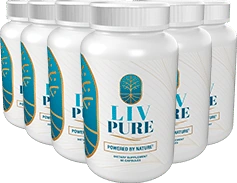
Know the category, then look at Livpure
Six named ingredients from the list above, and sixty days to decide whether they earn their place.
$49 to $79 a bottle · 60 days to change your mind
Order Livpure On The Official WebsiteOne-time payment, no subscription · 60-day money-back guarantee · lot LIV-26/GE-7267
 Sixty days from the day you buy it