Livpure Official Website › Side Effects
Livpure Side Effects: What to Know Before You Start
The seller lists no side effects for Livpure, but two ingredients are worth a check.
Berberine can upset the stomach and interacts with a long list of prescriptions, and concentrated green tea extract has been linked to liver problems in rare case reports.
If you take any prescription, ask your doctor first, and see who it suits.
One section per named ingredient, the medicines worth checking, and the symptoms that belong with a clinician instead.
Why a Livpure safety page exists at all
Herbal and dietary supplements are a recognised cause of drug-induced liver injury, and the NIH LiverTox database keeps a standing chapter on them for that reason. On a capsule sold for liver support, that is the one thing a buyer is entitled to have set out plainly rather than left to a footnote.
Nothing below is evidence about Livpure itself, which has not been the subject of a published trial. It is what the research records about the named ingredients, at the amounts the research used. Since no amount is published for any of the six, the honest form of every sentence here is the research dose beside the label’s silence.
Two of the six carry real notes. The other four are quieter — and saying so is part of the job, because a safety page that lists only hazards is as unbalanced as one that lists none.
Green tea extract in Livpure, and the liver

Camellia sinensis is the tea plant. Green tea extract concentrates its catechins — mainly EGCG — and it is the concentrate rather than the drink that carries the record below.
LiverTox gives green tea a likelihood score of A, its highest, meaning a well-established cause of clinically apparent liver injury. More than 100 cases have been published. Injury usually appears within one to six months of starting, usually looks like acute hepatitis, and usually resolves within one to two months of stopping. Fatal acute liver failure has been described.
The same source is equally explicit about the other half: the rate of symptomatic injury is undoubtedly low in comparison with how widely these products are used, and drinking green tea is not associated with liver injury. Both halves are the record, and either one on its own misrepresents it.
Susceptibility looks individual rather than dose-driven, which is what idiosyncratic means here: the amount that is uneventful for most people is not uneventful for everyone. NCCIH records that people carrying a particular immune-gene variant are markedly more prone, and puts that at 5 to 15 per cent of Americans.
| Source | What it measured | The figure |
|---|---|---|
| The Minnesota Green Tea Trial | 1,075 postmenopausal women taking 843 mg of EGCG a day for a year | ALT rose above normal in 6.7 per cent against 0.7 per cent on placebo, with no clinically apparent injury, and rose again on rechallenge |
| The European Food Safety Authority | Interventional trials of green tea catechins taken as a supplement | 800 mg of EGCG a day or more produced a statistically significant rise in serum transaminases. EU supplements supply 5 to 1,000 mg a day; a tea infusion supplies about 90 to 300 mg |
| The US Pharmacopeia’s 2020 review | Published cases of liver injury, by the intake reported | Cases span EGCG intakes from about 140 mg to 1,000 mg a day, so a low amount is not by itself a safety argument |
ALT is alanine transaminase, one of the enzymes made mainly in the liver and measured on a liver panel, as MedlinePlus explains. A raised enzyme is a signal, not a diagnosis.
The amount of camellia sinensis in a Livpure capsule is not published, so nobody, this desk included, can place it anywhere in that range. The one specific, actionable instruction is the US Pharmacopeia’s own, added to its green tea extract monograph: do not take it on an empty stomach, take it with food, because fasting sharply increases how much catechin is absorbed. The label’s direction is a large glass of water and says nothing about food.
Berberine in Livpure, and prescription medicines
Berberine is an alkaloid drawn from barberry, goldenseal and several other plants. Its own safety record on the liver is quiet: LiverTox scores it E, meaning it has not been linked to clinically apparent liver injury, and records mild gastrointestinal upset as the usual complaint at the ordinary herbal dose of 250 to 500 mg two or three times daily.
The interaction is the part that matters. In healthy men, 300 mg three times a day for two weeks — 900 mg daily — inhibited CYP2D6, CYP2C9 and CYP3A4: midazolam exposure rose 40 per cent and the dextromethorphan ratio rose ninefold. The authors concluded that drug-drug interactions should be considered.
Those three enzymes clear a long list of prescriptions between them. NCCIH names cyclosporine specifically, and adds that berberine has been linked to a harmful buildup of bilirubin in infants, is likely unsafe for them, and may be unsafe during pregnancy or while breastfeeding.

The honest limit on all of that: the interaction was measured at 900 mg a day and the amount in this capsule is not published, so nobody can say how far below that figure two capsules sit. That is exactly why the note stays on the page rather than being waved away as a small amount. Berberine can also lower blood glucose, which is worth knowing alongside anything else doing the same job.
What is documented for the other four Livpure ingredients
Silymarin
The standardised extract of milk thistle seed. LiverTox scores milk thistle E: it has not been implicated in liver injury, and its effects on CYP enzymes in the test tube have not produced clinically significant herb-drug interactions in people.
The same entry records the ordinary retail dose as 250 to 750 mg of silymarin taken two or three times daily, which is a useful number to hold beside a two-capsule serving carrying five other named ingredients.
Betaine
Also written trimethylglycine, obtained from food or made from choline in the body. LiverTox scores it E as well, and notes it has been given at 6 to 20 g daily without liver injury.
It has been an approved orphan drug for inherited homocystinuria since 1996. That is a fact about a rare metabolic disease and about nothing else on this label, and it is not an endorsement of anything.
Molybdenum
An essential trace mineral and the quiet one on the panel. The NIH Office of Dietary Supplements puts the adult RDA at 45 micrograms a day and the tolerable upper intake level at 2,000 micrograms, and states that molybdenum has no known, clinically relevant interactions with medications.
Deficiency is essentially unknown in healthy people eating ordinary food, legumes being rich in it, so a supplemental amount here is not filling a common gap.
Glutathione
A three-amino-acid peptide the body makes in the liver. The interesting question is absorption rather than harm: a single oral dose of about 3 g in seven healthy volunteers did not raise plasma glutathione at all, because it is broken down in the gut and the liver before it gets anywhere.
No safety signal has attached to it at supplement amounts. What the research does not show is a health outcome from taking it, which is a different conversation from a safety one and belongs on the ingredients page.
Who should check before the first Livpure capsule
Check first if this is you
- You take any prescription the liver clears. Berberine inhibited three of those enzymes at 900 mg a day, and cyclosporine is named specifically.
- You take atorvastatin or raloxifene. Green tea extract lowers atorvastatin blood levels and interacts with raloxifene.
- You are pregnant, breastfeeding, or thinking of giving it to anyone under 18. The answer for under-18s is simply no.
- You have a known liver problem. Not because this treats one, but because the US Pharmacopeia’s own cautionary labelling for green tea extract says not to use it if you do.
Stop and seek care, rather than ask
- Yellowing of the skin or the whites of the eyes.
- Dark urine, or unusually pale stools.
- Ongoing pain under the right ribs.
- Unexplained swelling, or unusual tiredness with any of the above.
The left-hand list is four specific conversations rather than a general instruction to ask somebody about everything. The right-hand list is not a reason to stop a supplement and wait; it is a reason to be seen. Livpure is a dietary supplement sold to support liver health and is not a treatment for hepatitis, fatty liver disease, cirrhosis or any other liver condition.
What is not known about Livpure safety
| The question | Where it stands |
|---|---|
| Has the finished product been tested for safety? | No published trial exists on it. Everything above is about single ingredients. |
| How much green tea extract is in a capsule? | Not published, so it cannot be placed against the 140 mg to 1,000 mg range the case reports span. |
| How much berberine is in a capsule? | Not published, so it cannot be placed against the 900 mg a day at which the enzyme inhibition was measured. |
| Is the capsule shell an allergen risk? | The shell material is not named on the label, and there is no allergen statement to read. |
| Does taking all six together change anything? | Nothing has studied this combination. Every figure on this page comes from a study of one ingredient on its own. |
| What does the label itself caution? | Adults 18 and over, not for anyone pregnant or nursing, and talk to a doctor before use if you take any prescription medicine. |
Two of the six carry documented interactions and four do not. That ratio is the useful summary of this page.
Sources cited on this Livpure safety page
- National Institute of Diabetes and Digestive and Kidney Diseases. Herbal and Dietary Supplements. In: LiverTox: Clinical and Research Information on Drug-Induced Liver Injury. Bethesda (MD): NIDDK; 2012-. https://www.ncbi.nlm.nih.gov/books/NBK548441/
- National Institute of Diabetes and Digestive and Kidney Diseases. Green Tea. In: LiverTox: Clinical and Research Information on Drug-Induced Liver Injury. Bethesda (MD): NIDDK; 2012-. https://www.ncbi.nlm.nih.gov/books/NBK547925/
- National Center for Complementary and Integrative Health. Green Tea: Usefulness and Safety. https://www.nccih.nih.gov/health/green-tea
- Oketch-Rabah HA, Roe AL, Rider CV, et al. United States Pharmacopeia (USP) comprehensive review of the hepatotoxicity of green tea extracts. Toxicol Rep. 2020;7:386-402. https://pubmed.ncbi.nlm.nih.gov/32140423/
- Dostal AM, Samavat H, Bedell S, et al. The safety of green tea extract supplementation in postmenopausal women at risk for breast cancer: results of the Minnesota Green Tea Trial. Food Chem Toxicol. 2015;83:26-35. https://pubmed.ncbi.nlm.nih.gov/26051348/
- EFSA Panel on Food Additives and Nutrient Sources added to Food (ANS). Scientific opinion on the safety of green tea catechins. EFSA J. 2018;16(4):e05239. https://pubmed.ncbi.nlm.nih.gov/32625874/
- Guo Y, Chen Y, Tan ZR, Klaassen CD, Zhou HH. Repeated administration of berberine inhibits cytochromes P450 in humans. Eur J Clin Pharmacol. 2012;68(2):213-217. https://pubmed.ncbi.nlm.nih.gov/21870106/
- National Center for Complementary and Integrative Health. Berberine and Weight Loss: What You Need To Know. https://www.nccih.nih.gov/health/berberine-and-weight-loss-what-you-need-to-know
- National Institute of Diabetes and Digestive and Kidney Diseases. Berberine. In: LiverTox: Clinical and Research Information on Drug-Induced Liver Injury. Bethesda (MD): NIDDK; 2012-. https://www.ncbi.nlm.nih.gov/books/NBK564659/
- National Institute of Diabetes and Digestive and Kidney Diseases. Milk Thistle. In: LiverTox: Clinical and Research Information on Drug-Induced Liver Injury. Bethesda (MD): NIDDK; 2012-. https://www.ncbi.nlm.nih.gov/books/NBK548817/
- National Institute of Diabetes and Digestive and Kidney Diseases. Betaine. In: LiverTox: Clinical and Research Information on Drug-Induced Liver Injury. Bethesda (MD): NIDDK; 2012-. https://www.ncbi.nlm.nih.gov/books/NBK548774/
- NIH Office of Dietary Supplements. Molybdenum: Fact Sheet for Health Professionals. https://ods.od.nih.gov/factsheets/Molybdenum-HealthProfessional/
- Witschi A, Reddy S, Stofer B, Lauterburg BH. The systemic availability of oral glutathione. Eur J Clin Pharmacol. 1992;43(6):667-669. https://pubmed.ncbi.nlm.nih.gov/1362956/
- MedlinePlus, U.S. National Library of Medicine. Liver Function Tests. https://medlineplus.gov/lab-tests/liver-function-tests/
How this Livpure safety page is written
This desk publishes what the label and the supplier state, and marks the places where a figure is missing. The four claims below are the ones a sceptical reader can audit in ten minutes, which is the only reason to make them:
- The bottle and the supplier are the source. The six ingredient names, the capsule count and the supply length come from the printed label, the supplier’s own listing artwork and the paperwork behind this desk. Prices come from the seller’s order page, read on 18 September 2026, not from a review column.
- The gaps are marked, never filled in. No amount is published for any of the six, so this website prints none and estimates none, including in the structured data a search engine reads.
- Sources are real and linked in the sentence. Every study cited here was confirmed against its own record before it was written down, and every government page was opened and checked by its title rather than assumed.
- Corrections change the date. Write to [email protected] and the review date at the foot of the page moves forward.
We earn when you buy. Getlivpure is the U.S. stocking partner for Livpure named at the top of this page, and this website makes money on orders placed through it. That is exactly why the missing amounts, the three-star review and the plain statement that Livpure is not a treatment for a liver condition are here: they are where our interest and yours pull apart, and you should be able to watch us choose.
Order support on +1 (302) 200-3480 handles tracking, changes, cancellations and refunds. It is not a sales line, and this website never presents it as a way to place an order: orders go through the checkout only.
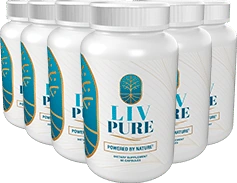
Checked the label? Order Livpure
Healthy adults 18 and over, the bottle shown to a pharmacist if you take medicine, and sixty days to send it back.
$49 to $79 a bottle · 60 days to change your mind
Order Livpure On The Official WebsiteOne-time payment, no subscription · 60-day money-back guarantee · lot LIV-26/GE-7267
 Sixty days from the day you buy it