Livpure Official Website › Notebook › Label literacy
Liver Detox: What A Supplement Can And Cannot Claim
- Detox has no fixed meaning. NCCIH found no compelling research behind it, and the FDA and FTC have acted against sellers who used the word.
- The liver makes bile. That is the job NIDDK gives it, and it is already being done.
- Supports is lawful. Treats is not. Only a drug may claim to treat, cure or prevent a disease.
- This bottle claims nothing on the front. The page selling it opens on belly fat. The two are not written to the same rules.
Search for a liver supplement and one word comes back on every label, every banner and every headline: detox. It is a useful word for selling a capsule. It is a poor word for describing an organ, and it carries no fixed meaning at all in the rules that decide what a supplement is allowed to print.
This piece is about the distance between those two things: what the liver does, what a label may lawfully say it supports, what it may never say, and where a sales page walks past the bottle it is selling. The Liv Pure bottle on this desk is a useful example, because the front of it carries no claim line at all.
What the liver actually does all day
Start with the organ rather than the marketing. NIDDK, the National Institute of Diabetes and Digestive and Kidney Diseases, lists the liver as one of the three solid organs of the digestive system, alongside the pancreas and the gallbladder, and gives its job in a line: it makes bile, and bile helps break down fat.
That is a smaller sentence than most liver supplement pages would like, and it is the accurate one. The liver is a chemical works — not a sieve. It builds and breaks down compounds continuously and sends bile into the small intestine as food arrives. There is no scheduled flush, no backlog and no reset. A healthy liver is already doing the thing the word detox is selling back to you.
That matters for how you read a label. A supplement can supply a nutrient the organ uses. It cannot give it a new job.
Why detox is a marketing word, not a physiological one
NCCIH, the federal centre for complementary and integrative health, has a page on exactly this question, and its findings are short.
- The studies are few, and they are of low quality.
- A 2015 review concluded that “there was no compelling research to support the use of ‘detox’ diets for weight management or eliminating toxins from the body”.
- A 2017 review found juicing and detox regimes produce an early drop in weight because calorie intake falls, and that the weight tends to return afterwards.
- There have been no studies of long-term effects at all.
NCCIH also records that the Food and Drug Administration and the Federal Trade Commission have acted against sellers of detox products, for hidden drug ingredients and for false disease claims.
One distinction the same page draws is worth carrying: it excludes medically supervised chelation, which is a real treatment for a diagnosed condition. Detox as a clinical procedure exists. Detox as a shelf category is a marketing word.
What a supplement label is allowed to say
The category a liver supplement sits in is narrow — narrower than most buyers assume. The FDA’s page on structure/function claims sets it out. A structure/function claim describes the role of a nutrient or ingredient in maintaining normal structure or function of the body. “Supports liver health” is that shape. So is “supports liver detoxification”, which is the wording the supplier records for this label.
Three things follow, and none of them is obvious from the packaging:
- Nobody approves it. The manufacturer notifies FDA within 30 days of putting the claim on the market, which is a filing rather than a review.
- The label has to print the disclaimer that the statement has not been evaluated by FDA, and that the product is not intended to diagnose, treat, cure or prevent any disease.
- The reason for that last clause is the whole of the ceiling: in FDA’s own words, only a drug can legally make such a claim.
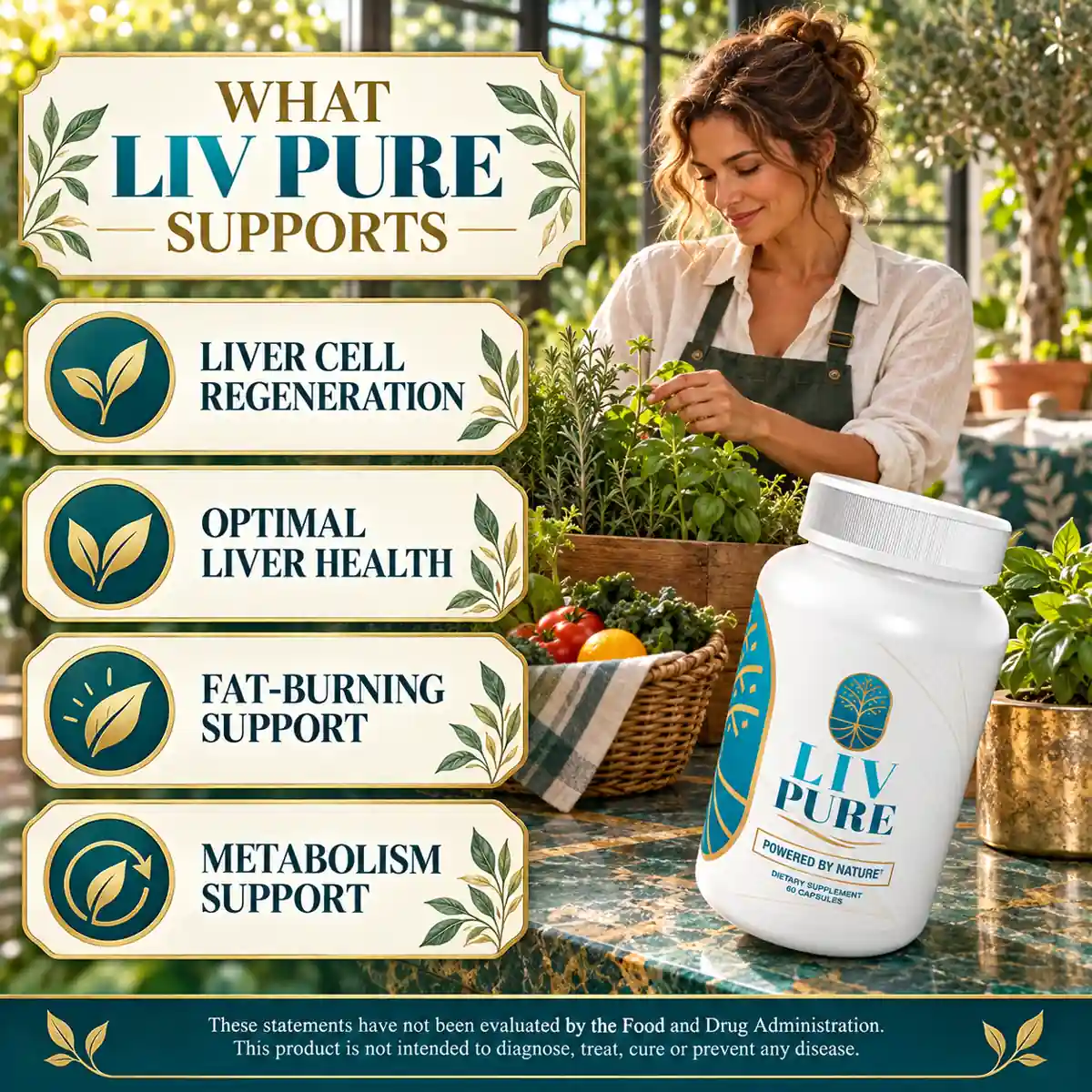
What a liver supplement may never say
Hepatitis, fatty liver disease and cirrhosis are diseases. A supplement naming one as a target has made a drug claim, whatever the label calls itself, and the same goes for the softer wordings that mean the same thing: reverses damage, repairs scarring, clears a diagnosis, replaces a prescription.
This is the single line that matters most on a website like this one. Livpure is a dietary supplement sold to support liver health. It is not a treatment for any liver condition and it never will be, and a page that blurs that is not being generous to the reader. It is selling them something they did not ask for.
| Wording | Allowed? | Why |
|---|---|---|
| Supports liver health | Yes | A structure/function claim about a normal function. |
| Supports liver detoxification | Yes | Structure/function, and the wording the supplier records for this label. |
| Helps maintain optimal liver health | Yes | Structure/function again, and one of the three lines this desk repeats. |
| Treats fatty liver disease | No | Names a disease. Only a drug may claim that. |
| Reverses liver damage | No | A therapeutic outcome claim. |
| Dissolves stubborn fat | No | An outcome promise, and it is not on this bottle. It is on the seller’s page. |
| Proven to fix the root cause | No | A disease claim wearing a mechanism costume, and nothing here has been proven. |
Livpure on the official website
Six named ingredients, 60 capsules a bottle, $49 to $79 a bottle and 60 days to send it back, empty bottles included.
Order LivpureWhere a sales page goes further than the bottle
The bottle and the page selling it are often written by different people to different rules. The front of this bottle prints four things: the wordmark, Liv Pure, then Powered By Nature, Dietary Supplement and 60 Capsules.
The seller’s own page carries three lines this website will not repeat. They are quoted here once, in the section whose job is to answer them:
- “Scientists Discover A Hidden Root Cause Of Stubborn Belly Fat”
- “designed to rapidly dissolve fat in even the worst cases”
- “has changed the lives of over 234,000 women and men from 18 to 80”
The answer is short — no paper is named behind the discovery, no journal and no researcher. The 234,000 figure has no source this desk can open. And on the underlying question, the nearest real evidence runs the other way: the Cochrane review of green tea preparations pooled randomised trials of twelve to thirteen weeks and found a difference of 0.04 kg outside Japan, with a confidence interval running from half a kilogram down to four hundred grams up. That is no effect, measured carefully, on the ingredient this formula leans hardest on.
The FTC’s own consumer guidance puts the general case in one sentence: “No product will let you eat all the food you want and still lose weight.” That is the standard this desk holds itself to, and it is why none of the three lines above appears in this website’s voice.

The standard behind any health claim in an advert
The FTC’s health products compliance guidance sets the test for whether an advertising claim is defensible: claims about the health benefits or the safety of a dietary supplement require substantiation in the form of competent and reliable scientific evidence. It also makes clear that advertising covers far more than television and print. A sales page, an email, a banner and a social post are all advertising.
A reader can use that test without being a lawyer. A page that names a study, a dose and a result has done the work. A page that names a discovery and a number of lives changed has not.
What this bottle prints, and what the page around it adds
Side by side, the two documents tell different stories, and the quieter one is the one that has to satisfy the rules.
| What it says | On the printed bottle | On the seller’s page |
|---|---|---|
| A claim on the front | None | Belly fat, in the headline |
| Ingredient names | Six named | Ten named, in two complexes |
| An amount for any of them | Not published | Not published |
| A serving size | Not published | Take it daily with a large glass of water |
| Capsule count | 60 capsules | Sold as a 30-day supply |
| An outcome promise | None | Several |
Read off the printed Liv Pure artwork and the seller’s order page on 18 September 2026.
That gap is not unusual, and by itself it is evidence of nothing except that two pieces of copy were written to two different standards. It is a reason to read the bottle rather than the banner, and it is why this website publishes what the label does and does not print as its own page.
Six checks you can run with a bottle in your hand
None of these needs a laboratory or a chemistry degree. They take about two minutes.
- Find the amounts. Turn the bottle over and look for a milligram figure beside each ingredient name. If the names are grouped under a blend, look for the blend total. A total is a ceiling: nothing inside it can weigh more than the whole.
- Find the serving size. Capsules per serving and servings per container turn a bottle into a number of days.
- Read the front for a disease word. Any product naming a diagnosis on the front is making a claim the category does not allow.
- Check for the FDA disclaimer. Its presence is the baseline, not a badge.
- Separate the seals from the certificates. A seal is artwork. Ask who certified it and when, and see what each seal on this bottle can and cannot prove.
- Compare the bottle with the page. Anything the page promises that the label will not print is the seller talking, not the product.
Run those six on Livpure and the result is mixed, which is the honest answer: six ingredients are named clearly, the capsule count is printed, the front carries no claim, and no amount is published for anything. Two checks come back blank, and this website says so rather than filling them in.
Livpure is a dietary supplement, not a treatment for any liver condition, and nothing on this page is medical advice. Yellowing of the skin or eyes, dark urine, pale stools, ongoing pain under the right ribs or unexplained swelling are reasons to be seen by a clinician, not reasons to buy a capsule. If you take prescription medicine, show the bottle to a pharmacist before the first capsule: two of the six named ingredients have documented interactions, and the berberine list is here.
One last thing about the word this piece started with. “Supports liver detoxification” is a lawful sentence and it is the supplier’s own. Read carefully, it is a sentence about an ingredient having a role in a process — not a promise that the process needed help. Keeping those two apart is most of what label literacy is.
Sources cited in this article
- National Institute of Diabetes and Digestive and Kidney Diseases. Your Digestive System and How It Works. https://www.niddk.nih.gov/health-information/digestive-diseases/digestive-system-how-it-works
- National Center for Complementary and Integrative Health. “Detoxes” and “Cleanses”: What You Need To Know. https://www.nccih.nih.gov/health/detoxes-and-cleanses-what-you-need-to-know
- U.S. Food and Drug Administration. Structure/Function Claims. https://www.fda.gov/food/nutrition-food-labeling-and-critical-foods/structurefunction-claims
- Federal Trade Commission. Health Products Compliance Guidance. https://www.ftc.gov/business-guidance/resources/health-products-compliance-guidance
- Federal Trade Commission, Consumer Advice. The Truth Behind Weight Loss Ads. https://consumer.ftc.gov/articles/truth-behind-weight-loss-ads
- Jurgens TM, Whelan AM, Killian L, Doucette S, Kirk S, Foy E. Green tea for weight loss and weight maintenance in overweight or obese adults. Cochrane Database Syst Rev. 2012;12(12):CD008650. https://pubmed.ncbi.nlm.nih.gov/23235664/
 Sixty days from the day you buy it